
Categories
Advocacy action

Joint statement on anti-racism in Finland and recommendations 2026

“Racism not only damages the lives of the people who encounter it, but society as a whole. It deepens mistrust, increases suspicions on all sides, and tears apart the social structure.” -United Nations


The International Day for the Elimination of Racial Discrimination, observed annually on 21 March, is when, in 1960, the police in Sharpeville, South Africa, opened fire on a peaceful demonstration against apartheid “pass laws” and killed 69 people. This led the UN General Assembly, in 1979, to designate a week for solidarity with people struggling against racism and racial discrimination.


In Finland, racial equality and non-discrimination, as outlined in the Finnish Non-Discrimination Act, remain largely unfulfilled. Numerous studies by institutions such as the European Union Agency for Fundamental Rights (FRA) reveal that racialized groups continue to face racism, institutional discrimination, exclusion, and systematic dehumanization.


Despite repeated commitments, the actions of Prime Minister Petteri Orpo’s Government fall gravely short in addressing racism and discrimination.
The Government’s action plan to combat racism and promote equality appears largely symbolic, showing no clear evidence of a genuine commitment to tackling racism. The overall climate of mutual respect and understanding in the country has clearly deteriorated and is further exacerbated by policymaking that normalises hate speech and the exclusion of ethnic, linguistic, and religious minorities. Divisions within society have deepened, reflected in instances of racial discrimination, hate crimes, and rising hatred on social media — developments that significantly undermine social cohesion.
The Prime Minister’s vow of zero tolerance for racism must be matched by concrete actions, not just words.


Since the Government submitted its equality statement to the Parliament in August 2023, its concrete legislative actions have instead moved toward constructing a system that structurally excludes racialised and migrant communities.


The Government is making Finnish citizenship increasingly difficult for migrants to obtain, shortening the period during which foreign workers who lose their jobs may seek new employment before losing their residence permit, tightening family reunification rules, and making international protection both harder to receive and less accessible for asylum seekers. It has also put public health at risk by limiting access to necessary non-urgent health care for undocumented migrants and reduced integration programmes.


The Government’s draft proposal for implementing the new EU refugee policy demonstrates an intention to apply the framework with the lowest possible standards. Although the new EU legislation provides substantial flexibility for national implementation, the Government has chosen the strictest interpretation, including the removal of the long-established legal safeguard of free legal aid for asylum seekers during the first and most critical stage of the asylum process. Moreover, the Government is disregarding the EU requirement for a sufficiently resourced national human rights monitoring mechanism for asylum seekers by failing to allocate adequate resources to the Non-Discrimination Ombudsman, the authority proposed to perform this oversight.


The Government’s plans to pursue safe third-country agreements with countries outside the EU as well as to establish so-called return hubs represent a highly dangerous policy shift that carries serious risks of human rights violations. Advancing these initiatives further signals a troubling unwillingness to uphold established international human rights obligations.


In addition, the Government’s plans to introduce a two-tier system of minimum unemployment benefits — providing a lower level for migrants and a higher level for others — are discriminatory by design. Plans to restrict some migrants’ access to child home care allowance compounds the inequalities. Together, these plans mark a significant change in Finnish social policy, in which entitlement to social security has traditionally been based on residence rather than country of origin.

OUR COLLECTIVE RECOMMENDATIONS:
As a collective community with extensive expertise, lived experience, and deep understanding of racism in Finland, we have examined the Government’s action plan to combat racism and promote equality. On this basis, we put forward the following recommendations:


Finland’s future must be firmly anti-racist. The Government should reverse its ongoing programmes of austerity targeting racialised and migrant communities and instead introduce legislation that robustly prevents racial discrimination across all sectors and levels of Finnish society. Particular attention is needed in areas such as employment and human trafficking, where enforcement standards must be strengthened to align with those established in gender equality legislation.


The Government’s plans to introduce lower levels of social security benefits for migrants and to restrict their access to certain benefits should be withdrawn. Social policy must be grounded on the principle of non-discrimination.


Hate crimes must be effectively investigated and perpetrators held fully accountable. Additionally, Finnish authorities must invest in identifying and addressing the multiple and intersecting forms of discrimination in hate-motivated crimes.


The Government should adopt legislative measures to combat racism, hate speech, and hate crimes and to promote equality to address the root causes and contemporary manifestations of racism in line with international human rights law, international standards, and EU legislation. Combatting racist hate speech requires bringing the Finnish Criminal Code into full alignment with the EU Framework Decision on combating racism and xenophobia. The prohibition of ethnic profiling must be clarified and strengthened in Finnish legislation.


We urge the authorities to intensify their efforts to promote trust, mutual respect, and understanding toward racialised minorities and migrant communities. In this regard, the authorities must refrain from — and promptly and unequivocally condemn — all incidents of hate speech, particularly when expressed by political leaders. They should actively foster intercultural dialogue and a spirit of tolerance and mutual respect among public figures and within media spaces.


In line with the recommendations of the European Commission against Racism and Intolerance (ECRI), we call on the Government to take decisive action to counter racist and LGBTI-phobic hate speech, including online and when perpetrated by public figures. The Government should establish a dedicated working group comprising representatives of all relevant authorities, equality bodies, civil society actors, academia, and the media. This group should be mandated to develop a comprehensive programme of concrete, measurable and time-bound actions to prevent and address hate speech.


We further urge the authorities to carry out a comprehensive and independent assessment of the cumulative impact of budget cuts and legislative changes on migrants and asylum seekers. The combined effects of these legislative weakenings on migrants’ rights must be evaluated and any legislative measures that result in unreasonable or inhumane consequences must be repealed. Migrants’ rights, including the fundamental right to seek asylum, should be reinforced, not diminished.


The Government must implement the EU’s new migration policy in a humane and rights-respecting manner, upholding human rights rather than defaulting to the minimum requirements permitted by EU legislation. Free legal aid must remain available to asylum seekers at all stages of the asylum process, and the mandated monitoring mechanism must be allocated sufficient resources to operate effectively. The Government should not establish return hubs nor pursue safe third-country agreements.


The Government should also provide meaningful support to anti-racist civil society actors and ensure their active participation in implementing the action plan to combat racism and promote equality. We call for sustained and predictable funding to guarantee the effective delivery of the Government’s action plan.


Beyond the implementation and funding of the action plan, the Government must ensure dedicated funding and structural support for organisations actively involved in direct anti-racism work in Finland, especially those founded and led by the racialised communities. Such support is essential to strengthen and expand anti-racist efforts across society. At present, most anti-racism work is carried out on a voluntary basis, largely due to the limited availability of funding for organisations, including those led by racialised African communities.


We collectively urge the Government to drastically raise its level of ambition in advancing these reforms through its action plan to combat racism and promote equality, to halt ongoing measures that contribute to racialised social exclusion, and adopt a new direction consistent with the commitments it has repeatedly made at both national and international levels. We further remind the Government that it has a binding obligation to uphold and protect the fundamental and human rights of all individuals.

Signatories to the statement: 

African Anti-Racism Society Finland ry

Amnesty International Finnish Section

Forum for Foreign Scholars in Finland ry

Sahwira International ry

Food not bombs Helsinki

Rasmus ry
Categories
Advocacy action

Public statement to the Finnish Government

Joint Statement on Finnish Government Reform Policies on Immigration and Integration

Date: August 25, 2023 Location: Helsinki

We, the undersigned companies, individuals, communities, NGOs, and institutions, have reviewed and analyzed the proposed reform policies on immigration and integration put forth by the Finnish government. We are deeply concerned and appalled by the direction these reforms take.

The proposed policies fail to recognize the fundamental principles of equality, justice, and inclusivity. They treat immigrants as mere labor market tools rather than human beings, perpetuating a sense of mistrust and scapegoating. We firmly oppose this inhumane approach and advocate for a society that values justice, equal opportunities, and equity for all individuals, regardless of their ethnicity, religion, residence status, citizenship, or economic status.

After careful consideration, we have identified several key concerns with the proposed reforms:

  1. The proposal to terminate work-based residence permits upon three months of unemployment is unrealistic and harsh. Although already present in the current reform has been rarely taken into reality and the employers were not forced to notify the termination to Migri. Finding new employment often takes longer than three months, and the requirements imposed by these reforms hinder immigrants’ ability to secure stable employment. This approach creates mental stress and insecurity within the immigrant community, ultimately harming the labor market and potentially leading to a mass departure of valuable labor force from Finland.
  2. The discriminatory nature of the reform proposal, which grants faster processes for permanent residence to higher-income immigrants, exacerbates inequality within Finnish society. Categorizing immigrants based on income, Finnish language skills, and field of education only serves to foster further disparities. The proposed reforms disproportionately impact low-income essential job sectors, which rely heavily on immigrant workers.
  3. The government claims to enhance migration and integration, but the proposed policies make it exceedingly difficult for individuals to migrate and integrate into Finnish society. Lengthening residency requirements for citizenship and permanent residency, coupled with stringent prerequisites such as language proficiency and income-level requirements, create unnecessary barriers and hinder the full integration of immigrants.
  4. The proposal to increase the use of temporary contracts will disproportionately affect the immigrant community, as they are statistically more likely to be employed on temporary or part-time basis. This dismantles the main job protection for immigrants, leaving them vulnerable to exploitation and discrimination in the labor market.

These proposed reforms run counter to Finland’s best interests and the needs of its economy. Numerous studies and indicators demonstrate the necessity of skilled labor immigration to address labor shortages and ensure future economic growth. Low-income essential job sectors, which heavily rely on immigrant workers, will face significant challenges under these reforms.

In light of these concerns, we propose the following recommendations:

  1. Maintain the current reasonable requirements for citizenship and residence permits, which reflect a serious commitment to integration and provide immigrants with security and stability in Finland.
  2. Adjust the three-month unemployment limit for terminating a permit to a more realistic timeframe, such as one year. This would allow for successful job search, skills development, and language learning.
  3. Implement stricter regulations on the use of temporary contracts to protect immigrant workers from exploitation and discrimination.
  4. Conduct a thorough evaluation and update of the integration program. Language tests and curricula need to ensure their effectiveness for immigrant’s integration to Finland. Enhance the quality and content of the integration process to provide immigrants with the necessary skills and support for successful integration into the labor market.
  5. Encourage universities and academic institutions to include compulsory Finnish language courses in international degree programs, facilitating the entry of international students into the labor market upon graduation. Additionally, provide opportunities for graduated international students and workers to further develop their Finnish language skills and support their integration into the work-life.
  6. We urge the government to shift its policy approach and view immigrants as potential valuable contributors to Finnish society. By working with immigrants rather than against them, Finland can harness their skills and talents to address labor market challenges and foster a more inclusive and prosperous society.

We call upon the Finnish government to reconsider its proposed immigration and integration policies and adopt a more inclusive, fair, and forward-looking approach that values the contributions of immigrants and fosters a diverse and prosperous Finnish society. By working together, we can create a society that thrives on diversity, equal opportunities, and social cohesion.

Categories
Advocacy action

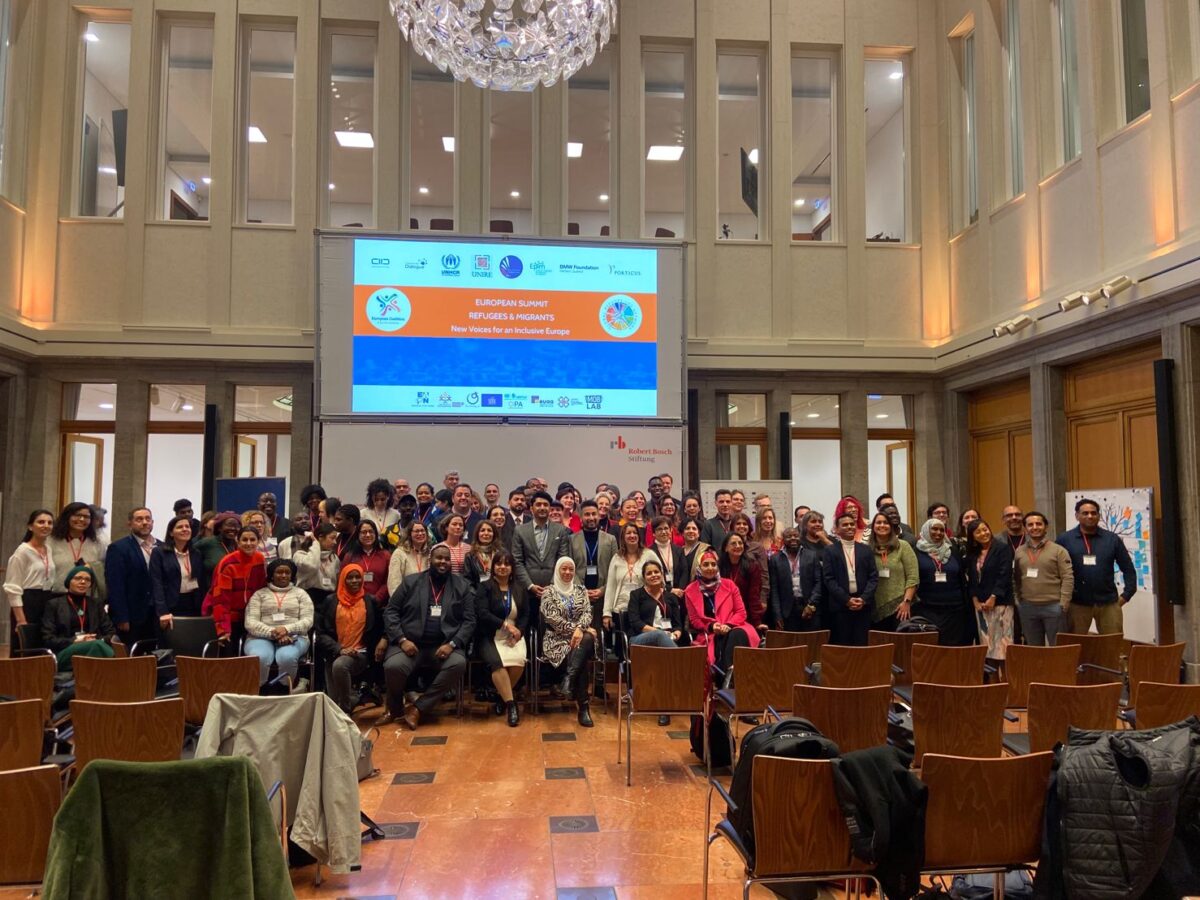
European Summit of Refugees and Migrants 17-19 January 2023 in Berlin

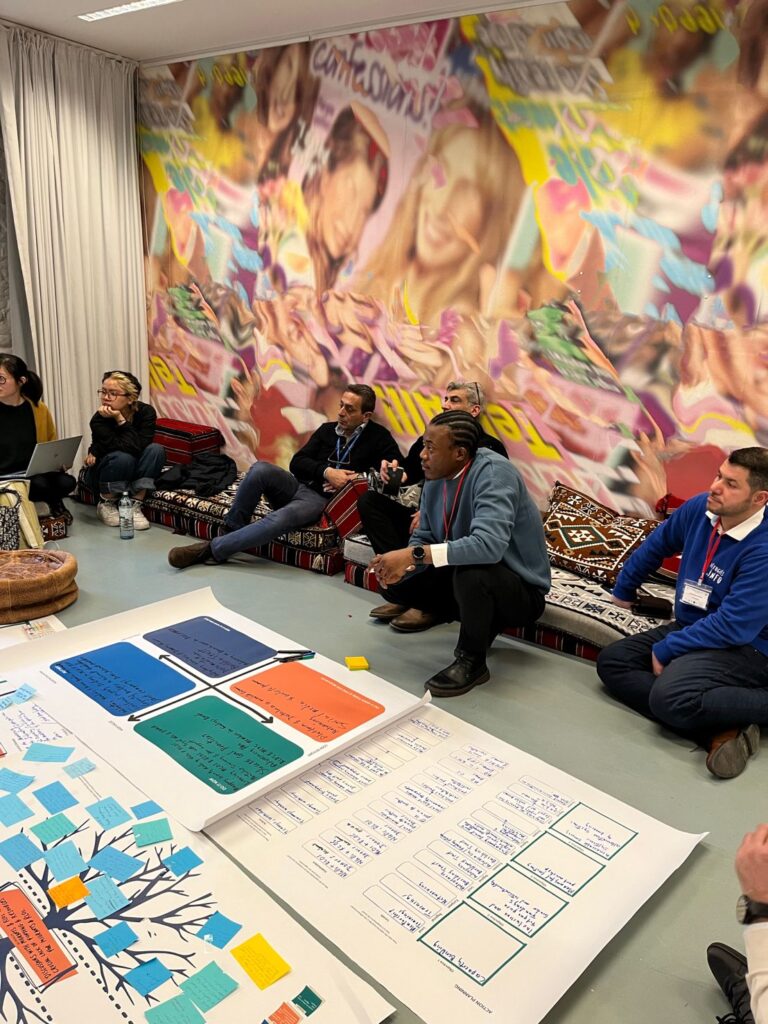
Our Chairperson had the opportunity to join the Second Edition of the European Summit of Refugees and Migrants 17-19 January 2023 in Berlin, Germany. The event is organised by the European coalition of migrants and refugees and Global Refugee-Led Network.

This summit brought together community organizers, leaders, advocates, practitioners, and activists of refugee and migrant backgrounds from all the EU countries as well as the UK. Together, they will strengthen their capacity to influence the European agenda and European policies, including on integration.

Participants discussed the continuous need to build meaningful and value-based partnerships; funding through inclusive, intersectional and fit-for-purpose funding programmes; the need to tell stories of shared humanity; and the collaboration and solidarity that flourish in safe spaces and in allyship across social sectors.

The event was also meant to serve as a platform for sharing experiences, concerns and interests. There were many inspiring encounters through the networking during these three days. We will continue to keep in touch with our new friends and work stronger together on the European level.

Categories
Advocacy action

Negative representation of Africans and Africa in the Finnish media

There are nearly 50,000 Africans and people of African descent living in Finland and this number has been rising steadily over the years. However, the reality within the Finnish society is far from supporting or even representing this group of people. Society here includes the media, as in printed and virtual press, TV, radio, magazines, books, and today social media.

The story of Africa has always been told as a single story…poverty, war, famine, drought, etc. From this stereotypical view point any country with this reality needs saving. However, we must understand that Africa is more than these colonial stereotypes – such as Africa being the “white man’s burden”. No group of people has the monopoly of poverty, backwardness, war, famine. etc.

Why is Africa always portrayed as if Africa must be saved?

The historical background to the issue is colonialism and slavery, both deemed wrong in the global society for a while now. However, since the Western colonizers stepped foot in African some 600 years ago, the western media has been on a white saviour mentality. This white saviour mentality is now a dire problem in Finland and Europe. The specific image in the media for the Western (and particularly European) white audience that Africa and Africans as need to be saved from themselves by Europeans has never stopped. Ignorant Europeans thinking Africans need salvation is a prejudice which is laughable to Africans. The prejudice runs deep and is the biggest controversy as Europeans (and the West) have been depending on the African continent for centuries as they exploit the minerals and natural resources. As an African I can say that Europe needs to be saved from a lot of things. Greed, capitalism, coloniality, racism, individuality etc. Every person in the periphery of such worldview needs to be saved.

How does the media take part in creating those prejudiced images

The issue is also that we are in the 21st century and this representation is not different to how it was 60 years ago. The Finnish society and western media are obsessed and stock with a 1920 image of Africa we never get to see the new Africa in Finnish and other western media.  Africans and people of African descent are constantly and systematically being portrayed by Finnish and other western media as criminals, lazy, poor and descendants of lesser ethnicity the media are not interested in covering stories that are positive, about the accomplishment of Africans in Finland they are always about a negative story. The Finnish media and western media have a historic record and pattern in promoting Afro phobia which has turned into a culture of racism and hate towards Africans. All this aiming to continue to justify and project white supremacy as we see in most western society increasing rise in institutional racism and structural discrimination towards Africans and people of African descent. Africans and people of Africans descent are being targeted by police and other law enforcement officers. All these stemming from the negative representation of Africans and people of African descent by the media.

This representation of Africans will not change because it is not neutral. It is a capitalist framework aimed at keeping African in an inferior position while simultaneously maintaining the superiority of the colonizers, benefiting from the exploitation of the land and its people. Dehumanisation of Africans and the negative representation of Africa in the media sells papers and views. A positive presentation would change the dynamics of the entire society and Finland needs to ask themselves – do you truly wish for equality?

Decolonialisation is a step towards the better

Finland and Europe need to decolonize their mindset and educational systems. Europe needs to be saved from its ideological mindset that Africa needs to be saved. This saviour discourse and mentality is not aimed at helping the Africans, it is aimed at keeping Africa reliant, it is aimed at making the Europeans feel good about themselves. It is aimed at keeping the superiority-inferiority stereotype that shaped today’s worldview of Europe and Africa respectively.

Decolonialisation of the Finnish media includes representation shift as well. Africans and people of African descent are poorly represented in the Finnish society and generally in the western nations, especially in positions of power and influence. This is a global phenomenon. Finnish media often uses white Europeans and other non-black people to cover and discuss issues that are about Africa and Africans as if there is no African expert among the Africans living in Finland. The Finnish media also portrays a certain type of African on their media promoting colourism by casting mostly light skin Africans or people of African descent. 

Lastly, the media is not interested in covering stories that are positive, about the accomplishment of Africans in Finland and African successes. The media is monotonous, with one group of people representing all other groups. Westerners believe that Africa has not developed as much as the rest of the world. Of course, there are developing countries and poor people in Africa, but the same applies to other continents as well, Europe included. African continent is full of diversity and prosperity as well. We have trained professionals, experts, visionaries, and revolutionaries – just like any other continent. When the media always shows a certain kind of image of Africa, even people with education can think this is true. It is the collective duty of the society to dismantle this false colonial stereotyped image of Africa and Africans. This would be a good step in stopping the continuous oppression of Africans and people of African descent.

Author: Eugene Ufoka

Categories
Advocacy action

Why is the Finnish colonial board game Star of Africa problematic?

In this board game, the goal is to explore the continent and gather riches by collecting gemstones and ultimately, to find the biggest diamond, the Star of Africa. Essentially, the player takes on the role of the colonialist.

The first issue is the negative representation of Africa as just a jungle, a no man’s land, an exotic playground with primitive people and no previous ownership. This was never the case. Before the colonizers landed on African soil, there were striving civilizations, empires, and societies in Africa. Just to name a few, Ethiopia was a well-advanced nation that fought and defeated colonial invaders, the Mali empire thrived for centuries and had the first university in Timbuktu, Benin empire with great craftmanship and ancient Egypt both known vastly beyond their boarders. This false image of Africa was created and promoted by European colonizers to justify their colonization of Africa and white supremacy and effectively, created the white savior mindset.

Secondly, making any game or anything that glorifies the concept of racism is hurtful and offensive to Africans. Colonialism is a very dark and painful past in Africa that should not be turned into an entertainment game. Africa is still suffering from the banality of evil of colonialism. Africans do not need to be reminded of the atrocities and traumas of colonialism daily. The fact that colonialism is taught and promoted as African history is also part of the problem. Colonialism should be taught as history of Europe – like it truly is. Implementation of colonizing Africa was planned for example in Berlin 1884 (among other instances) by the Europeans. Colonialism should always be linked and attached to Europeans as part of their history in Africa. Europeans should never forget that colonialism build Europe and games like African star are remnants of colonialism.

This game is the first contact with the African continent for many children and as such, a big influence on their perception and view of Africa. The Star of Africa game, in its part, enables the development of a colonial mindset, racism and Afrophobia and should be treated accordingly.

Author: Eugene Ufoka